
 IT
IT


FAQ
Lorem ipsum At vero eos et accusamus et iusto odio dignissimos ducimus qui blanditiis praesentium voluptatum deleniti.Blow Off Valve
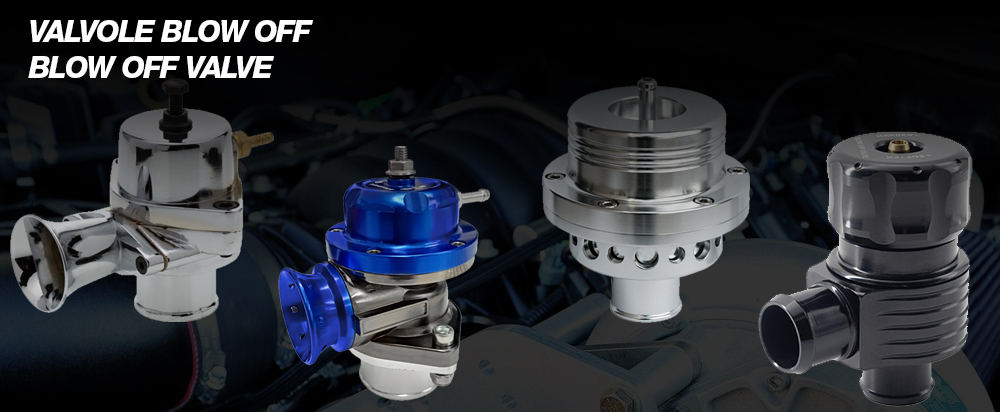
In brief: a Blow Off valve, also known as a Pop Off valve, is used to release the excess pressure generated by the turbo when the throttle is closed. It helps protect the turbocharger, improves the response of the forced induction system and, in atmospheric venting models, produces the classic sporty sound when lifting off the throttle.
Blow Off and Pop Off Valves: what they are, how they work and which one to choose
Blow Off valves, often also called Pop Off valves, are components used in turbo engines to manage the excess pressure generated by the turbocharger.
Their main function is to release pressure when the throttle is closed, helping to protect the turbo and improve engine response during subsequent acceleration.
When the turbo keeps spinning and the throttle butterfly closes, compressed air can flow back toward the compressor, creating a harmful pressure return. A properly sized Blow Off valve helps reduce this phenomenon, preserving the turbocharger and improving the reliability of the forced induction system.
Simoni Racing offers different solutions for petrol turbo cars, supercharged diesel engines, universal applications and tuned engines.
In this guide you will find:
- What a Blow Off valve is
- What a Pop Off valve is used for
- How it works and where it is installed
- Difference between an atmospheric valve and a recirculating valve
- Comparison table of Simoni Racing models
- Installation tips and frequently asked questions
What is a Blow Off valve?
A Blow Off valve is a pressure relief valve designed for turbocharged forced induction engines.
When accelerating, the turbo compresses air and sends it toward the engine. When the throttle is released or a gear is changed, the throttle butterfly closes quickly, but the turbo continues to generate pressure for a few moments.
This excess pressure must be released or managed correctly. The Blow Off valve acts precisely during this phase, opening the passage and releasing the excess compressed air.
What is a Pop Off valve used for?
The Pop Off valve is mainly used to:
- release the excess pressure generated by the turbo;
- reduce pressure return toward the compressor;
- protect the impeller, bearings and turbocharger components;
- improve turbo response during subsequent acceleration;
- obtain, in atmospheric models, the classic sporty sound when lifting off the throttle.
A properly sized valve does not directly increase engine power, but it helps the turbo system work more efficiently, steadily and safely.
How does a Blow Off valve work?
The Blow Off valve works by using the pressure difference between the forced induction circuit and the engine vacuum signal.
During acceleration, the valve remains closed and the turbo sends compressed air toward the engine. When the throttle is closed, a vacuum is created that triggers the valve to open.
At that point, the excess pressure is either vented externally or recirculated into the intake circuit, depending on the type of valve. This prevents the pressure wave from returning toward the turbocharger, a phenomenon that can abruptly slow down the impeller and increase mechanical stress on the turbo.
Where is the Blow Off valve installed?
The Blow Off valve must be installed along the intake circuit, between the turbo outlet and the throttle body.
The ideal position is generally along the intercooler or intake pipework, preferably between the intercooler and the throttle body. It is important that the valve is correctly connected to the vacuum signal and installed away from high heat sources.
Simoni Racing recommends keeping the valve at least 100 mm away from intense heat sources, or protecting it properly with heat shields.
Difference between an atmospheric Blow Off valve and a recirculating valve
Blow Off valves are not all the same. One of the main differences concerns the way excess air is managed.
Atmospheric Blow Off valve
The atmospheric valve vents pressure to the outside. It is the most popular solution for those looking for a clear sporty sound, the classic hiss when lifting off the throttle or changing gear.
It is especially suitable for racing, tuning and for those who want a more pronounced sound effect.
Recirculating valve
The recirculating valve sends the air back into the intake system. It is a more discreet solution, often preferable on certain vehicles with sensitive electronic management, because it keeps the circuit closer to the original configuration.
It is suitable for those seeking reliability, functionality and lower acoustic impact.
How to choose the right Blow Off valve
Choosing the right Blow Off valve depends on several factors:
- engine type;
- boost pressure;
- original or tuned configuration;
- type of vehicle use;
- desired sound;
- type of available connection;
- need for recirculation or atmospheric venting.
For a petrol turbo car with a sporty tuning setup, an atmospheric valve with a strong sound may be suitable. For vehicles with more sensitive electronic management, a recirculating valve may be preferable. For TDI diesel engines, however, specific kits with controllers and dedicated components must be used.
Simoni Racing tip: for petrol turbo cars with a sporty sound, you can consider an atmospheric valve such as VBO/5, VBO/9 or VBO/15. For a more discreet solution or one suitable for sensitive systems, choose a recirculating valve such as VBO/7 or VBO/13. For TDI diesel engines with electronic throttle, the dedicated solution is VBO/8.
Available connection types
V-Band flange
The V-Band flange allows for a strong, precise and secure connection. It is particularly suitable for turbo systems with high pressure or for sporty applications.
The kit includes a clamp and weld-on flange, offering a complete solution for stable and professional installation.
Version with hose connection
Versions with hose connections are designed to fit standard silicone hoses. This solution makes installation simpler and more versatile, often avoiding the need for welding.
It is a suitable choice for those looking for a more practical solution for integration into existing systems.
Aluminium flange
The aluminium flange is suitable for aluminium pipes and provides a solid and durable connection. The use of quality components, suitable clamps and sealing O-rings helps ensure precise, leak-free installation.
Stainless steel flange
The stainless steel flange is ideal for applications requiring greater mechanical strength and excellent corrosion protection. It is particularly suitable for steel or stainless steel intake pipes.
Which spring should you use on your vehicle?
Choosing the correct spring depends on the engine vacuum at idle. To identify it, the vacuum must be measured when the engine is warm and has reached the correct operating temperature.
The valves are supplied with a pre-installed configuration. In many cases, the 0.35-0.50 bar spring is among the most common and widely used.
However, the correct choice may vary depending on the engine, boost pressure and tuning level. For this reason, Simoni Racing recommends contacting qualified personnel or your trusted tuner.
Simoni Racing Blow Off valves: which model should you choose?
Below is an overview of the main models available in the Simoni Racing catalogue.
| Model | Type | Ideal for | Main feature |
|---|---|---|---|
| VBO/5 | Two-piston valve | Powerful petrol turbo cars | Strong sound and stable pressure |
| VBO/7 | Recirculating valve | VAG, Saab, Volvo | Closed circuit and interchangeable springs |
| VBO/8 | Kit for diesel engines | TDI diesel engines with electronic throttle | Includes controller, solenoid and wiring |
| VBO/9 | Universal valve | Turbocharged cars | Reinforced diaphragm and sporty sound |
| VBO/10 | Replacement bypass valve | Replacement of the original valve | Aluminium body and adjustable spring |
| VBO/13 | Full recirculation | Those looking for discretion | Pressure release into the intake system |
| VBO/14 | Sequential valve | Fast response | Handles up to 2.2 bar |
| VBO/15 | High-performance valve | Powerful engines, drift and drag | 50 mm piston and V-Band flange |
VBO/5 – Professional two-piston Blow Off valve
The VBO/5 is a professional two-piston valve, designed for petrol turbo cars and applications with powerful turbochargers.
Thanks to the integration of two synchronized springs, it does not require frequent pressure adjustments. After installation, it maintains a pressure of approximately 2.5 bar.
The valve body is made of polished PA06 aluminium with an 80 mm diameter. The main piston has a diameter of 40 mm, while the second piston, made of Teflon, contributes to the sealing and reliability of the system.
During gear changes, the valve produces a strong and distinctive sound, ideal for those looking for a sporty and high-performance solution.
VBO/7 – Recirculating valve for VAG, Saab and Volvo
The VBO/7 is a recirculating valve particularly recommended for VAG, Saab and Volvo engines.
Thanks to its closed-circuit operation, it helps maintain management that is more compatible with the vehicle’s electronics, reducing the risk of ECU errors.
The valve is supplied with three springs of different stiffness, so it can adapt to different boost pressure levels. The correct spring should be selected with the support of a tuner, based on the engine configuration.
VBO/8 – Blow Off kit for TDI diesel engines
The VBO/8 is a relief valve designed for supercharged diesel engines and TDI engines equipped with an electronic accelerator pedal.
The kit contains:
- valve;
- controller;
- solenoid;
- wiring;
- intake pipe;
- wiring diagram.
It is the recommended solution for those who want to install a Blow Off valve on a compatible diesel engine, using a complete system with dedicated components.
VBO/9 – Universal Blow Off valve
The VBO/9 is a universal relief valve designed for most turbocharged cars.
It features a thicker and stronger diaphragm, designed to release pressure effectively and produce the classic sporty sound when lifting off the throttle.
The kit contains:
- gasket;
- vacuum line;
- bolts;
- T-fittings required for installation.
It is a versatile solution for those looking for a universal valve with good sound and turbo protection function.
VBO/10 – Replacement bypass valve
The VBO/10 can directly replace the standard bypass valve.
Original internal recirculation valves can deteriorate over time due to age, heat cycles and wear of the rubber diaphragms. In addition, they are often not designed to handle boost pressures higher than the original ones.
The VBO/10 offers a more robust structure, with an aluminium body and a lightweight precision-machined piston. This ensures fast response, good sealing and greater durability over time.
Main features:
- chromed aluminium body;
- aluminium piston;
- Boost-Balance technology with positive-seal O-ring;
- installation with aluminium weld-on pipe;
- 360° swivelling upper screw for vacuum reference;
- spring preload adjustable via cap.
VBO/13 – Full recirculating valve
The VBO/13 is a full recirculating valve. This system redirects all excess pressure back into the intake circuit.
It is ideal for those who want the benefits of a quality valve without an overly noticeable sound. It is therefore a suitable solution for enthusiasts looking for discretion, reliability and functionality.
VBO/14 – Sequential valve in HKS SSQV 3 style
The VBO/14 features a design inspired by the famous HKS SSQV 3 sequential configuration.
The venting is fully sequential and requires no adjustment. The valve handles pressures up to 2.2 bar and starts responding from around 0.3 bar, offering fast and pleasant throttle response.
The kit includes:
- flange;
- gasket;
- circlip;
- T-fitting for installation.
It is a suitable solution for those looking for fast response, distinctive sound and complete installation.
VBO/15 – Blow Off valve with 50 mm piston
The VBO/15 is a valve with a powerful venting effect, designed for applications where traditional valves may struggle to release high pressures.
The 50 mm piston allows large volumes of air to be managed, making this model suitable for powerful engines, major tuning setups and sporting uses such as drift and drag racing.
The kit includes an aluminium flange with V-Band clamp connection, allowing the valve to be connected or removed quickly and securely.
Important installation tips
When installing the Blow Off valve, it is essential to use only silicone hoses of the correct size and suitable for the pressure/vacuum level of your application.
It is important to check that:
- all pipes are secured with suitable clamps;
- the correct fittings are used;
- there are no pressure leaks;
- the valve is correctly connected to the vacuum signal;
- the chosen position is not too close to high heat sources.
The valve must be positioned along the intercooler or intake pipework, between the turbo outlet and the throttle body.
For a correct and safe result, Simoni Racing recommends that installation and adjustment be carried out by qualified personnel.
Important technical note: Blow Off and Pop Off valves must be chosen based on the engine configuration, the type of turbocharger, boost pressure and vehicle use. Incorrect installation can cause pressure leaks, irregular operation, electronic faults or non-optimal management of the forced induction system.
Frequently asked questions about Blow Off valves
Does a Blow Off valve increase power?
No, the Blow Off valve does not directly increase engine power. Its function is to manage excess pressure, protect the turbo and improve the response of the forced induction system.
Does the Blow Off valve protect the turbo?
Yes, a properly sized valve helps reduce pressure return toward the compressor, helping to reduce stress on the turbocharger.
Where should the Blow Off valve be installed?
It should be installed between the turbo outlet and the throttle body, along the intercooler or intake pipework.
Is an atmospheric valve or a recirculating valve better?
It depends on the car and the objective. The atmospheric valve produces a more noticeable sound, while the recirculating valve is more discreet and may be more suitable for vehicles with sensitive electronic management.
Can I install a Blow Off valve on a diesel engine?
Yes, but a specific kit must be used. For supercharged diesel engines and TDI engines with electronic throttle, Simoni Racing offers the VBO/8.
Which spring should I use?
The spring should be chosen based on the engine vacuum at idle, measured with the engine warm. In many cases, the 0.35-0.50 bar spring is among the most common, but the correct choice depends on the engine configuration.
Can the Blow Off valve cause ECU errors?
On some vehicles, especially those with sensitive electronic management, an unsuitable atmospheric valve can cause faults or irregular operation. In these cases, a recirculating valve may be preferable.
Does it need to be installed by a professional?
Yes, it is recommended. Correct installation is essential to avoid pressure leaks, operating problems or incorrect adjustments.
Discover Simoni Racing Blow Off valves
The Simoni Racing range includes Blow Off valves, Pop Off valves and recirculating systems designed for different applications: petrol turbo cars, TDI diesel engines, VAG, Saab and Volvo vehicles, tuned engines and sporting use.
Choose the model best suited to your vehicle and always rely on a qualified installer to achieve the best results in terms of reliability, sound and turbo protection.
Other Frequently Asked Question