
 IT
IT


FAQ
Lorem ipsum At vero eos et accusamus et iusto odio dignissimos ducimus qui blanditiis praesentium voluptatum deleniti.How to prepare car and driver for a Track Day: complete guide to driving on track
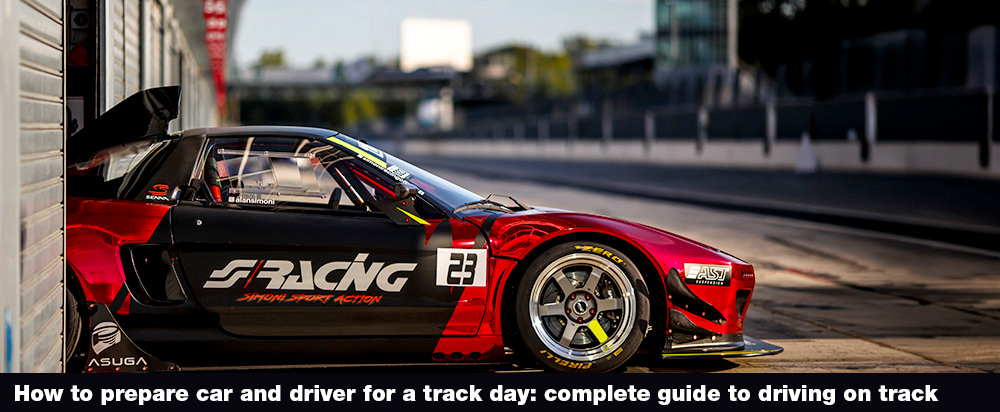
In brief: to enjoy a Track Day safely, it is important to prepare both the car and the driver. Before driving on track, you should check tyres, brakes, engine oil, brake fluid, cooling system, wheel tightening, fluid levels, any leaks and towing points. It is useful to bring a helmet, suitable clothing, tyre pressure gauge, basic tools, spare fluids, tape, cable ties, compressor and accessories for monitoring the car.
How to prepare yourself and your car for a Track Day: complete guide to driving on track
A Track Day is a day at a circuit where enthusiasts and owners of sports, road or modified cars can drive on track in a controlled environment, following the rules set by the organiser and the circuit.
The track allows you to better understand your car’s behaviour, improve your driving technique and experience sporty driving away from road traffic. However, even though the environment is controlled, the stress placed on tyres, brakes, engine, suspension and driver is much more intense than in everyday driving.
For this reason, it is essential to arrive prepared. Preparing for a Track Day is not only about chasing performance, but above all about safety, reliability, control and common sense.
Simoni Racing, a brand specialising in car accessories, tuning, sporty interiors, styling and automotive customisation components, offers various accessories that are useful for those who want to make the cabin more functional and better monitor vehicle parameters during sporty driving, such as additional gauges, gauge holders, sport seats, racing harnesses, exhaust tips, air filters and car accessories.
In this guide you will find:
- what a Track Day is and what to expect from your first day on track;
- how to prepare your car before driving on circuit;
- which checks to carry out on brakes, tyres, oil, cooling and tightening;
- how to choose sporty road tyres, UHP tyres or semi-slicks;
- which accessories to bring to the paddock;
- how to prepare the driver: helmet, clothing, documents and briefing;
- how to behave during track sessions;
- frequently asked questions about safety, tyres, brakes, gauges and preparation.
What is a Track Day?
A Track Day is an organised event at a race circuit that allows you to drive your own car on track, generally in sessions and according to precise rules defined by the organiser.
It is not a race, it is not an official competition and it should not be approached as a challenge against other participants. The main goal is to drive safely, learn the racing lines, understand how your car reacts and improve progressively.
During a Track Day, the car is subjected to repeated braking, intense acceleration, corners taken at higher speeds than on the road and higher operating temperatures. For this reason, a car that is perfectly usable every day may require specific checks before entering the circuit.
Important note: each circuit and each organiser may have different rules regarding helmets, clothing, tow hooks, noise limits, passengers, insurance, seat belts, convertibles and modified vehicles. Before taking part, you should always read the event regulations.
First rule: safety before performance
Preparing for a Track Day should not begin with extreme suspension setups, high power outputs or competition tyres. The first thing to do is make sure the car is mechanically sound and that the driver is ready to face the day with clarity and focus.
The priorities are:
- efficient brakes, because on track they are the most stressed component;
- tyres in good condition, with checked pressure and adequate tread;
- correct fluids, especially engine oil, brake fluid and coolant;
- no leaks, vibrations, unusual noises or loose components;
- tidy cabin, with no loose objects that could move while driving;
- rested and focused driver, because track driving requires constant attention.
Car checks before a Track Day
Before taking your car on track, it is advisable to carry out a general inspection, preferably with the support of a mechanic or qualified specialist, especially if the car has high mileage, has been modified or has never been driven on circuit before.
| Component | What to check | Why it matters on track |
|---|---|---|
| Tyres | Wear, pressure, age, shoulders, tread, any cuts or deformation. | They are the only contact point between car and asphalt. On track, they work at high temperatures. |
| Brakes | Pads, discs, brake fluid, lines, any vibrations or noises. | Repeated braking generates a lot of heat and can cause fading or loss of effectiveness. |
| Engine oil | Level, quality, possible need for replacement before the event. | The engine works for longer periods under high load and at high rpm. |
| Cooling | Coolant, hoses, radiator, fans, any leaks. | On track, temperatures can rise quickly, especially during long sessions or on hot days. |
| Suspension and steering | Play, shock absorbers, arms, joints, bushes, alignment. | Precision and stability are essential when turning in, cornering and braking. |
| Wheels | Bolt tightening, absence of cracks, correct wheel fitment. | Tightening should be checked before entering the track and, if necessary, between sessions. |
| Cabin | Seat, seat belts, mirrors, loose objects, floor mats, driving position. | The driver must be stable, comfortable and free to use steering wheel and pedals without obstacles. |
Track Day tyres: sporty road tyres, UHP or semi-slicks?
Choosing tyres is one of the most important aspects of a day on track. The most extreme tyre is not always the best choice: you need to consider the car, the driver’s experience, temperature, session duration, weather conditions and how often the car is used on circuit.
For a first Track Day, a sporty road tyre or UHP tyre in good condition can often be more suitable than a very specialised semi-slick. It offers progressive behaviour, reaches operating temperature more easily and allows you to better understand the car’s limit.
| Tyre type | Advantages | Limitations | When to choose it |
|---|---|---|---|
| Sporty road tyre | Good compromise between everyday use and track driving, progressive behaviour. | May lose effectiveness after many intense laps. | First experience, road cars, non-extreme driving. |
| UHP | More grip than a touring tyre, good versatility, easy management. | Less precise and less heat-resistant than a semi-slick. | Occasional Track Days, mixed road/track use. |
| Road-legal semi-slick | Greater grip, stiffer shoulder, more precision under cornering load. | Requires more attention to temperature, pressure, wet conditions and setup. | More experienced drivers, prepared cars, frequent track use. |
| Slick | Maximum grip in the right conditions. | Not suitable for road use, requires experience, setup, correct temperatures and a suitable context. | Specialist use, prepared vehicles, racing context or compatible events. |
Tyre pressures: on track, pressure increases with temperature. It is important to check pressures both cold and hot, following the instructions of the tyre manufacturer, specialist or organiser. Avoid random or excessive adjustments.
Brakes: the most important check before entering the track
During a Track Day, brakes are subjected to much higher stress than in road use. Even a powerful car with excellent tyres becomes difficult to manage if the braking system is not in proper condition.
Before the event, it is advisable to check:
- brake pads, which must have enough material and a compound suitable for the intended use;
- brake discs, which must not show cracks, excessive wear or deformation;
- brake fluid, which must be in good condition and suitable for the operating temperatures;
- brake lines, which must not have leaks, swelling or signs of failure;
- brake pedal, which must feel consistent and not spongy.
If during a session the pedal becomes long, soft, vibrates abnormally or the car brakes less effectively, you must slow down, do a cool-down lap and return to the pits to check the situation.
Oil, coolant and temperatures: why monitor them
During track driving, the engine operates under higher loads and for longer periods. Oil temperature, coolant temperature and oil pressure become important parameters for understanding whether the car is working correctly.
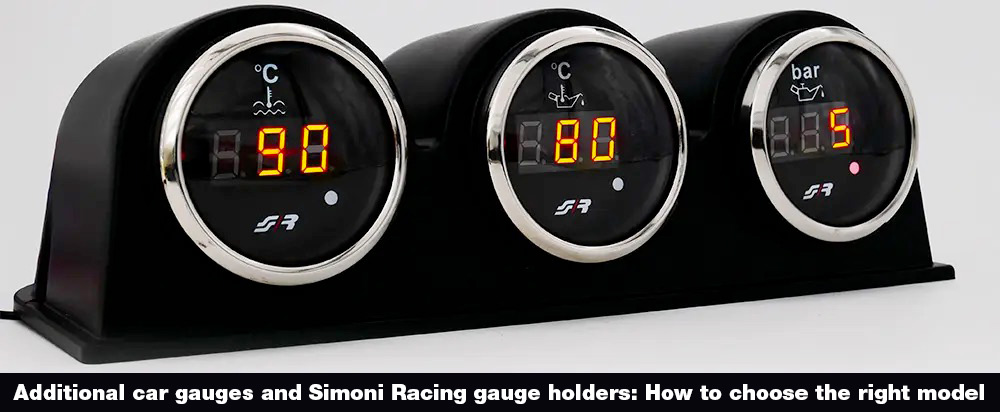
Simoni Racing additional gauges can help monitor these values, especially on modified, turbocharged, sports cars or vehicles often used on circuit. Pressure gauges, temperature gauges, voltmeters and multifunction gauges allow you to keep an eye on parameters that are not always shown in detail by the original instrumentation.
| Parameter | Useful gauge | Why monitor it on track |
|---|---|---|
| Oil pressure | Oil pressure gauge | Helps detect pressure drops in the lubrication circuit. |
| Oil temperature | Oil temperature gauge | Allows you to understand whether the lubricant is working within the correct range. |
| Coolant temperature | Coolant temperature gauge | Helps monitor the cooling system and possible overheating. |
| Voltage | Voltmeter | Allows you to check the battery, alternator and stability of the electrical system. |
| Turbo pressure | Turbo boost gauge | Useful on forced-induction engines to check boost and vacuum pressure. |
Warning: additional gauges help monitor the vehicle, but they do not replace maintenance, professional diagnosis or mechanical checks before a day on track.
Seat, belts and driving position
A correct driving position is essential on track. The driver must be able to control the steering wheel, pedals and gear lever without moving too much in the seat. If the body slides in corners, there is a tendency to use the steering wheel for support, reducing precision and safety.
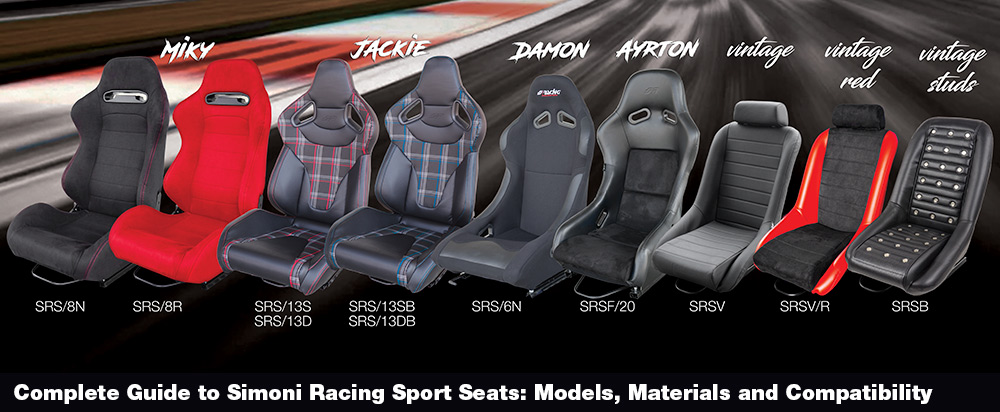
Simoni Racing sport seats can be a solution for those who want a more supportive cabin geared towards sporty driving. Before installation, however, it is necessary to check compatibility with the vehicle, brackets, sliders, seat belts, side airbags and requirements for road or track use.
Racing or multi-point harnesses can improve body support, but they must be installed correctly and used in accordance with the manufacturer’s instructions, the organiser’s rules and any applicable regulations.
Cabin safety: sport seats, racing harnesses, brackets and mounting accessories must be chosen and installed carefully. If in doubt, it is always advisable to contact a qualified installer and check the event rules.
What to bring to a Track Day
Bringing the right equipment can make the difference between a calmly managed day and a day interrupted by small problems that could easily be solved in the paddock.
| Category | What to bring | Why you need it |
|---|---|---|
| Tyre check | Pressure gauge, 12V compressor, valves or deflation tool, tyre repair kit. | Allows you to manage pressures and intervene in case of minor problems. |
| Tools | Spanners, sockets, screwdrivers, pliers, torque wrench, cable ties, duct tape. | Useful for checks, small tightening jobs and quick interventions in the paddock. |
| Fluids | Engine oil, compatible brake fluid, water or coolant, funnel, cloths. | Allows possible top-ups or checks between sessions. |
| Safety and towing | Towing eye, tow hook, compatible straps if needed, work gloves. | Many circuits require a visible and usable towing point. |
| Cleaning and visibility | Glass cleaner, cloths, paper towels, tape for numbers or headlights if required. | Clean windscreen and mirrors improve safety and concentration. |
| Driver | Water, snacks, spare clothing, documents, charger, chair. | The day can be long and physically demanding. |
Driver preparation: helmet, clothing and documents
The driver must arrive at the track rested, hydrated and with the equipment required by the organiser. Even if a Track Day is not a race, the physical and mental effort can be high, especially for first-timers.
Before setting off, it is good to check:
- driving licence and documents required by the organiser;
- insurance and roadside assistance, if required or recommended for the event;
- liability waiver, often required for driver and passengers;
- approved helmet, according to the circuit rules;
- suitable clothing, often including long trousers, long sleeves and closed shoes;
- gloves and suitable shoes, useful for improving feel and control.
Clothing rules: some events require a helmet, long sleeves, long trousers, closed shoes or specific technical clothing. In the case of highly modified cars, multi-point harnesses or roll bars, additional equipment may be required. Always check the regulations before registering.
The day before the Track Day
The best preparation begins before arriving at the circuit. The day before, it is advisable to calmly check the car, prepare the equipment and organise documents, clothing and materials to bring.
Recommended checklist:
- check engine oil level, brake fluid and coolant;
- check the condition of tyres, brake pads and brake discs;
- check for any leaks under the car;
- empty the cabin and boot of unnecessary objects;
- prepare helmet, documents, clothing and equipment;
- fill the car with enough fuel;
- clean windscreen, windows and mirrors;
- rest well and avoid arriving at the event tired.
What to do when you arrive at the circuit
Arriving early allows you to complete registration, briefing, checks and car preparation without rushing. Rushing is one of the worst enemies of safety on track.
Before the first session:
- complete registration and hand in any required documents;
- listen carefully to the mandatory briefing;
- fit or make accessible the towing eye, if required;
- check tyre pressure and wheel tightening;
- adjust seat, steering wheel, belts and mirrors;
- remove loose objects from the cabin;
- check that helmet and clothing are correct;
- enter the track calmly, especially during the first laps.
How to manage your first laps on track
During the first laps, you should not chase a lap time. It is more important to learn the layout, understand the racing lines, monitor temperatures and assess how the car behaves.
A good progression includes:
- out lap, to warm up tyres, brakes and engine;
- progressive laps, increasing the pace only when car and driver are ready;
- mirror checks, to let faster cars pass safely;
- cool-down lap, before returning to the pits;
- paddock check, checking tyres, brakes, fluids, unusual noises and smells.
Common sense on track: a Track Day is not a race. Avoid aggressive overtaking, respect flags and marshals, leave space for faster cars and return to the pits if the car shows abnormal behaviour.
What to check between sessions
After each session, it is useful to carry out a quick check of the car. Small signs such as brake smell, tyre pressure that is too high, brake pedal drop or low oil level should not be ignored.
| Check | When to do it | What to observe |
|---|---|---|
| Tyre pressure | After each session or when the temperature changes. | Hot pressure increase, abnormal wear, overworked shoulder. |
| Brakes | After intense sessions or if the pedal changes behaviour. | Smells, smoke, vibrations, long pedal, pad wear. |
| Fluids | With the engine off and in safe conditions. | Oil level, coolant, any leaks or unusual smells. |
| Wheel tightening | Before sessions, if required or recommended. | Correct torque according to the vehicle or wheel specifications. |
| Driver | Between sessions. | Fatigue, dehydration, loss of concentration. |
Useful Simoni Racing accessories for track driving
For those who take part in Track Days or sporty driving on circuit, some Simoni Racing accessories can be useful for improving control, ergonomics and car customisation.
| Simoni Racing category | Usefulness from a Track Day perspective | What to check |
|---|---|---|
| Additional gauges | Monitoring of oil pressure, oil temperature, coolant temperature, turbo, voltmeter and rev counter. | Compatibility with vehicle, sensors, installation and reading position. |
| Gauge holders | Neat installation of 52 mm gauges on dashboard, pillar or DIN panel. | Available space, visibility, airbags, controls and safety. |
| Sport seats | Improved lateral support and a more stable driving position. | Brackets, sliders, compatibility, side airbags, seat belts and regulations. |
| Racing harnesses | Greater body stability during intense braking and cornering. | Mounting points, seat, installation and event requirements. |
| Sport air filters | Can improve engine response and breathing depending on the configuration. | Compatibility, maintenance and correct installation. |
Track use and road use: some accessories may be suitable for sporty, tuning or circuit use, but they are not always compatible with road use or with every vehicle. Always check approval, compatibility and event rules.
Common mistakes to avoid at your first Track Day
- Pushing hard straight away: the first laps are for warming up the car and driver, not for finding the limit.
- Ignoring tyre pressures: pressure changes significantly when hot and affects behaviour, grip and wear.
- Neglecting the brakes: old fluid or unsuitable pads can ruin the day.
- Not listening to the briefing: flags, entry points, exits and overtaking rules must be understood before driving.
- Leaving loose objects in the cabin: they can move while driving and become dangerous.
- Not cooling down: after intense laps, it is useful to do a slower lap before returning to the pits.
- Driving tired: concentration drops quickly, especially during first experiences.
Quick checklist before entering the track
- Helmet worn and fastened.
- Seat belts correctly adjusted.
- Seat, steering wheel and mirrors adjusted.
- Objects removed from cabin and boot.
- Tyre pressure checked.
- Wheels tightened correctly.
- Oil, coolant and brake levels checked.
- Towing eye fitted or available if required.
- Windscreen and mirrors clean.
- Briefing attended and circuit rules understood.
Frequently asked questions about Track Days and car preparation
What is a Track Day?
A Track Day is a day at a circuit where you can drive your own car on track while following the organiser’s rules. It is not a race, but an opportunity to improve your driving and better understand how your car behaves.
Do I need a prepared car to drive on track?
Not always. Many Track Days are also open to road cars in good condition. However, it is essential to check brakes, tyres, fluids, tightening, any leaks and organiser requirements before entering the circuit.
What are the most important checks before a Track Day?
The most important checks concern tyres, brakes, engine oil, brake fluid, cooling, wheel tightening, suspension, steering, leaks and a cabin free from objects.
Which tyres should I use for a Track Day?
For a first Track Day, sporty road tyres or UHP tyres in good condition may be sufficient. Semi-slicks offer more grip, but require more attention to pressures, temperatures, setup and weather conditions.
Are semi-slicks always better on track?
No. Semi-slicks can offer more grip and precision, but they are not always the best choice for a beginner or for a completely road-going car. A progressive sporty tyre can be easier to manage and more suitable for learning.
Should I change the brake fluid before going on track?
It is advisable to check the condition of the brake fluid and replace it if it is old or unsuitable for high temperatures. On track, brake fluid is heavily stressed and degraded fluid can reduce braking effectiveness.
Do I need a helmet for a Track Day?
In most events, a helmet is required. The type of accepted helmet may vary depending on organiser and circuit, so you should check the regulations before registering.
What should I wear to drive on track?
Long trousers, long sleeves and closed shoes are often required. For more technical events or prepared cars, fireproof clothing, gloves, racing shoes or other devices may be required. Always check the event rules.
Do I need a towing eye?
Many circuits require a towing point to be fitted or easily accessible. It is useful in case of going off track or mechanical failure, because it allows marshals to recover the car safely.
What should I bring to the paddock?
It is useful to bring a pressure gauge, compressor, torque wrench, basic tools, tape, cable ties, engine oil, compatible brake fluid, cloths, water, snacks, documents, helmet and spare clothing.
Are additional gauges useful on track?
Yes, they can be useful for monitoring oil pressure, oil temperature, coolant temperature, turbo pressure, voltage and engine rpm. Simoni Racing gauges help keep under control parameters that are not always visible in the original instrumentation.
Is a sport seat useful for track driving?
A sport seat can improve body support and driving precision, but it must be compatible with the car and installed correctly. You need to check brackets, sliders, seat belts, side airbags and event rules.
Can I use racing harnesses during a Track Day?
Racing harnesses can be useful for improving body support, but they must be installed correctly and used with compatible seats, mounting points and devices. Always check the organiser’s rules and contact a qualified installer.
What should I do if the brakes lose effectiveness during a session?
You should slow down, avoid further heavy braking, do a cool-down lap if possible and return to the pits. Do not continue pushing if the brake pedal becomes long, soft or inconsistent.
Can I immediately chase a lap time?
It is better to avoid doing so. During the first sessions, it is more useful to learn the track, racing lines, braking points and the car’s behaviour. Speed should come progressively and in a controlled way.
Should I do a cool-down lap?
Yes, after a few intense laps it is advisable to do a slower lap to gradually lower the temperatures of brakes, tyres, engine and turbocharger, if present, before returning to the pits.
Does a Track Day damage the car?
Track driving increases wear on tyres, brakes, fluids and mechanical components. Good preparation, sessions managed with common sense and checks between sessions reduce the risk of problems, but wear will still be higher than in road use.
Get ready for your Track Day with Simoni Racing accessories
A day on track requires attention, checks and suitable accessories. Simoni Racing offers additional gauges, gauge holders, sport seats, racing harnesses and car accessories designed for those who live sporty driving, tuning and cabin customisation.
Before entering the circuit, always check compatibility, installation, event regulations, the car’s condition and the required equipment. The track is the ideal place to learn, but it must be approached with preparation, caution and respect for the rules.
Other Frequently Asked Question